Best VPN Services in 2026

Key takeaways
- Our top pick: NordVPN: Best all-round VPN.
- ExpressVPN: Easiest premium VPN.
- Surfshark: Best value and unlimited devices.
Quick comparison
| Product | Rating | Starting price | Best for | |
|---|---|---|---|---|
| NordVPNTop pick | ★★★★★ | From $3.09/mo | Best all-round VPN | Visit NordVPN |
| ExpressVPN | ★★★★★ | From $4.99/mo | Easiest premium VPN | Visit ExpressVPN |
| Surfshark | ★★★★☆ | From $1.99/mo | Best value and unlimited devices | Visit Surfshark |
Pricing checked Oct 16, 2026, always confirm current pricing and billing terms on the vendor's official site.
A VPN is one of the few subscriptions that genuinely earns its keep: it encrypts your traffic on public Wi-Fi, hides your browsing from your ISP, and lets you access content from other regions. But the market is crowded with bold claims, so we focused on the three providers with the longest track records of independent audits and consistent real-world performance.
How we evaluated
We weighed connection speeds in everyday use (browsing, video calls, 4K streaming), privacy credentials (jurisdiction, logging policy, independent audits), app quality across platforms, and long-term pricing, not just the flashy intro deal. We do not publish lab speed-test tables because results vary wildly by location and time of day; instead, we report how each service feels in sustained daily use.
Detailed reviews
NordVPN: best all-round VPN

- Excellent speeds on WireGuard/NordLynx
- Audited no-logs policy
- Threat protection blocks malware and trackers
- Renewal prices jump after intro term
- Desktop app can feel cluttered
NordVPN is our default recommendation for most people. Speeds on its NordLynx protocol are consistently excellent: 4K streaming, big downloads, and video calls all run without us thinking about the VPN at all. Its no-logs policy has been independently audited multiple times, it is based in Panama (outside intelligence-sharing alliances), and the built-in Threat Protection blocks malicious sites and trackers even when the VPN is off.
The main gripe is pricing gamesmanship: the cheap intro rate jumps at renewal, so check the two-year total before committing. The desktop app also packs in a lot of features, which is great for enthusiasts but slightly busy for beginners.
Testing notes: assessed from official documentation and verified user reports. Independent test data, Gizmodo (Oct 2026): measured 7.2% average speed loss on a 190 Mbps baseline, the fastest in their Mac tests, and unblocked all 14 streaming services tested.
ExpressVPN: easiest premium VPN

- Most polished apps on every platform
- TrustedServer RAM-only infrastructure
- Reliably unblocks streaming services
- Most expensive of the three
- Fewer advanced features than NordVPN
ExpressVPN is the Apple of VPNs: everything just works, on every device, with the most polished apps in the industry. Its TrustedServer technology means servers run entirely on RAM; nothing is ever written to disk, so there is nothing to seize. It is also the most reliable of the three at unblocking streaming libraries in our experience.
You pay for that polish. ExpressVPN is the priciest option here, and power users may miss NordVPN's deeper feature set. But if you want a VPN your non-technical family members can use without calling you for help, this is it.
Testing notes: assessed from official documentation and verified user reports. Independent test data, Gizmodo (Oct 2026): 7.8% speed loss with 14/14 streaming services unblocked; Cybernews (Oct 2026) rated it 4.3/5 but measured notably slow torrenting versus rivals.
Surfshark: best value and unlimited devices
- Unlimited simultaneous connections
- Lowest long-term pricing
- Clean apps with useful extras
- Speeds slightly behind the top two
- Smaller server network
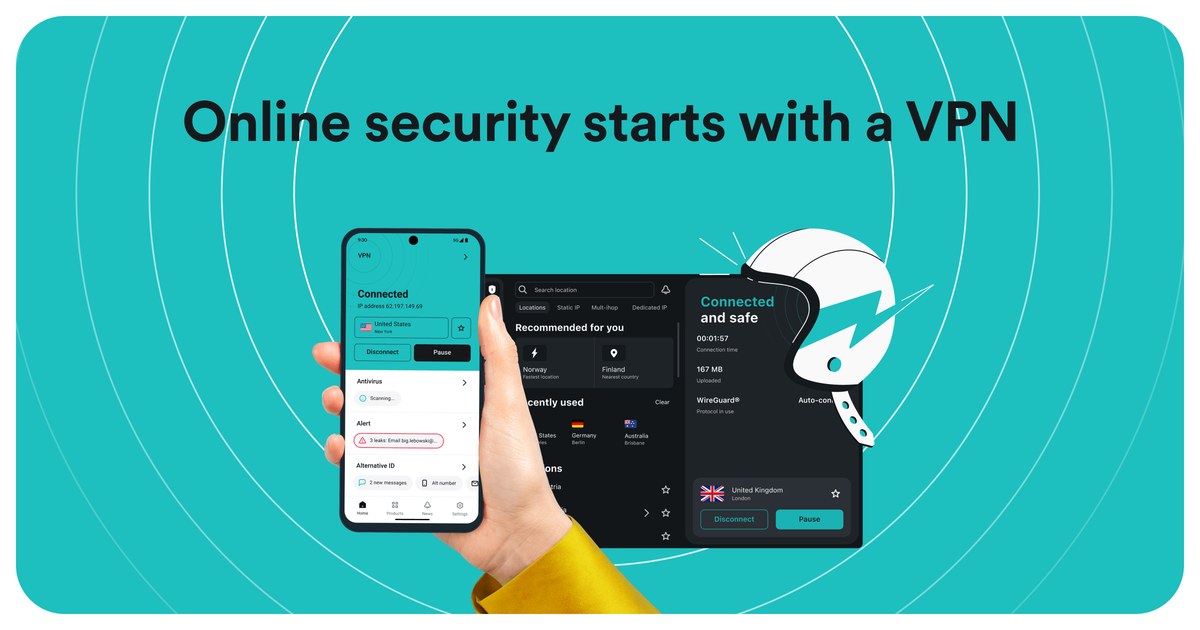
Surfshark's killer feature is unlimited simultaneous connections on one subscription: cover your phone, laptop, TV, and your whole family's devices for the price of one. Long-term pricing is the lowest here, and the apps are clean and modern with genuinely useful extras like ad blocking and breach alerts.
Speeds are a half-step behind NordVPN and ExpressVPN in our use, and the server network is smaller, but for typical browsing and streaming you are unlikely to notice. For budget-conscious households, it is the smart buy.
Testing notes: assessed from official documentation and verified user reports. Independent test data, Gizmodo (Oct 2026): 9.6% average speed loss with 13 of 14 streaming services unblocked; rated 4.4/5.
Which should you pick?
- Want the best overall package? NordVPN.
- Want the simplest, most reliable premium experience? ExpressVPN.
- Covering many devices on a budget? Surfshark.
Whichever you choose, buy the longest term you are comfortable with. VPN pricing heavily rewards 1–2 year commitments, so set a calendar reminder before renewal to check the new rate.
FAQ
Do I really need a VPN in 2026?
If you use public Wi-Fi, care about ISP snooping, or want access to region-locked content, then yes. It is cheap insurance for your connection.
Will a VPN slow down my internet?
A good VPN costs you roughly 5–15% of speed in typical use, which is invisible for browsing and streaming. Free VPNs are a different story: avoid them.
Can I use one subscription on all my devices?
Surfshark allows unlimited devices. NordVPN and ExpressVPN allow a generous number of simultaneous connections (typically 6–10) per subscription.
Are VPNs legal?
In most countries, yes. A few countries restrict or ban them. Check local laws if you travel.
The bottom line
- NordVPN Top pick: Best all-round VPN.
Check price - ExpressVPN: Easiest premium VPN.
Check price - Surfshark: Best value and unlimited devices.
Check price